Lately I've been writing a book, bit by bit.
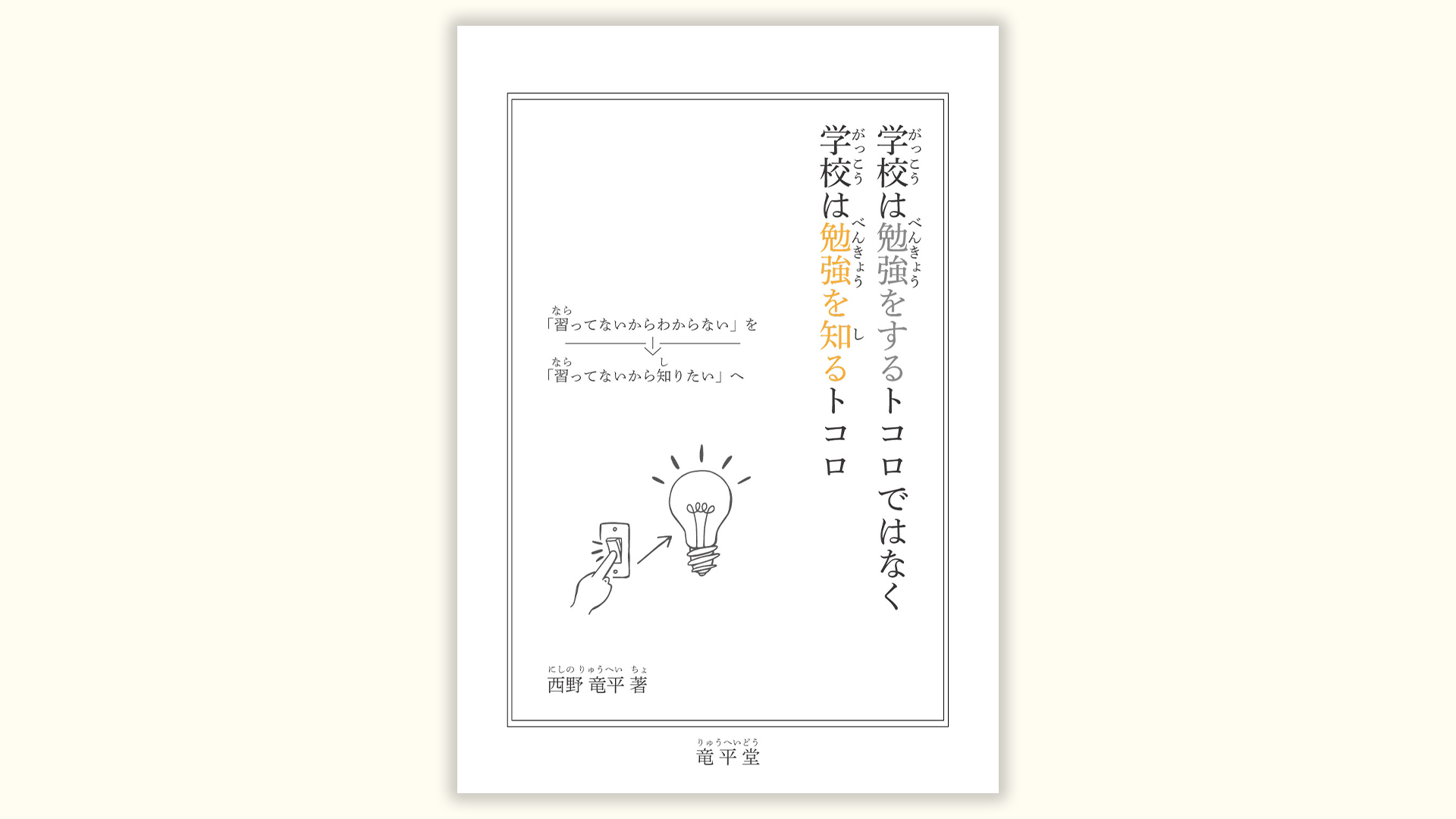
The title is
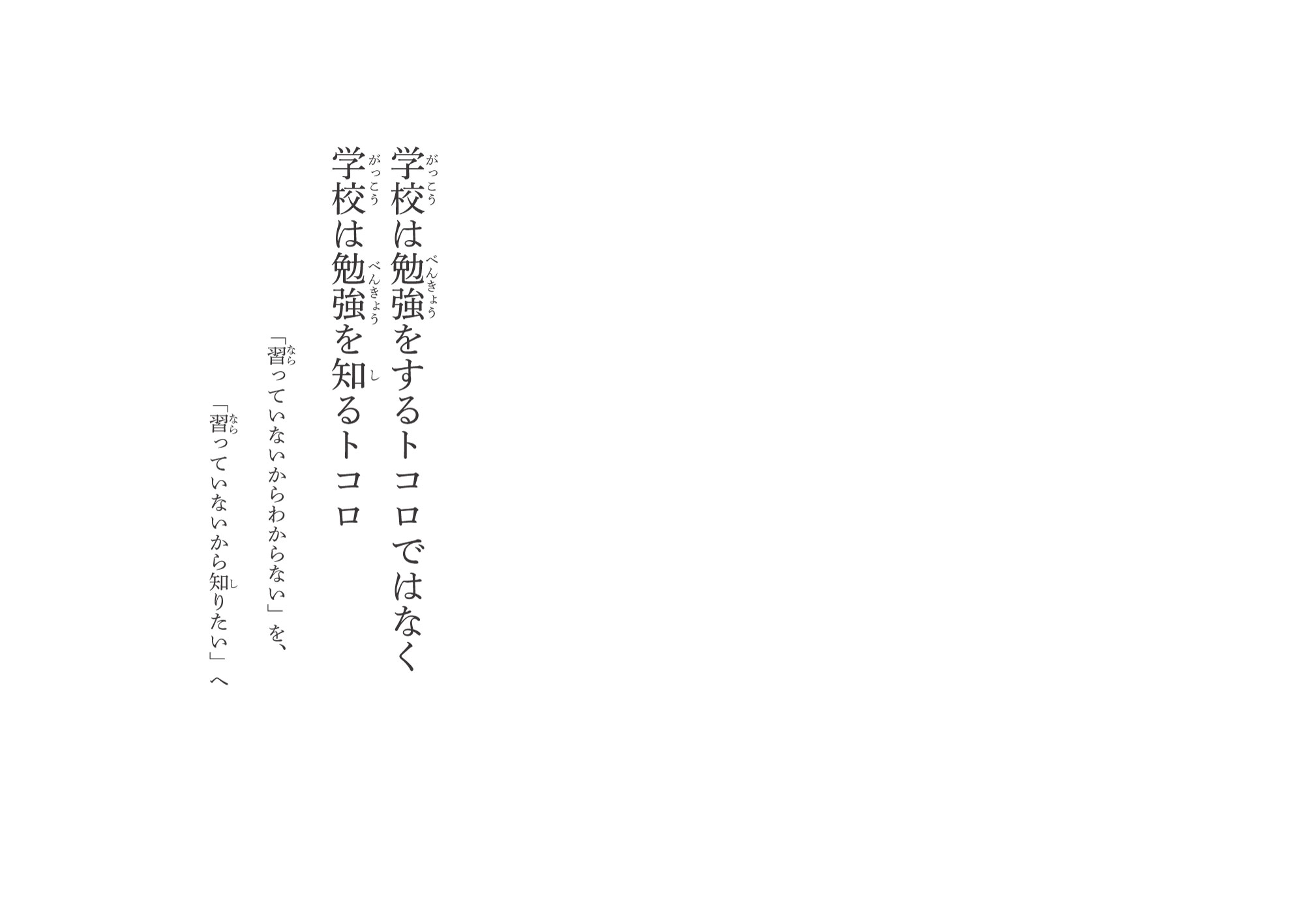
“School Isn't Where You Study; It's Where You Discover Studying”.
From “I don't get it because no one taught me”
to “I want to know because no one taught me.”
With that idea at its center,
I'm writing down what I've thought about school, studying, and learning in my own way.
As an instructor working with students,
I sometimes hear things like
“Sensei, we haven't learned that in class, so I don't know.”
Of course, it's only natural not to know something you haven't been taught.
But what comes after that,
- “Then let's look it up.”
- “Let's ask the teacher.”
- “Let's think about it a little more on my own.”
whether you can take the next step like that
makes a big difference in how you learn from then on, I think.
While thinking about this, I started to feel that
“school isn't a place to finish studying, but a place to discover the many doorways into learning,”
is what I came to feel.
This book started out as my attempt to put those thoughts together.
The idea comes from a post I wrote earlier on my blog, School Isn't Where You Study; It's Where You Discover Studying.
Writing the book is itself writing practice
Of course, I'm neither a professional writer nor an education scholar.
This is also my first time writing a book in earnest.
That's exactly why one of my goals this time
is to use it as training for my writing.
Even things I understand perfectly in my head
suddenly get hard once I try to put them into words.
- “Will this really get across?”
- “Is it okay to explain things in this order?”
- “Am I repeating myself?”
- “Is the wording too strong?”
Write, reread, fix. Then write again.
I keep going around that loop.
And honestly, it's pretty fun.
And I hope that readers of this book will come away thinking,
“Maybe studying doesn't have to be so stiff and serious,”
is what I'm hoping for.
Rather than making people good at studying itself,
I'd be happy if the book nudged their dislike of studying just a little to the side.
Laying out the book in Illustrator
Alongside the writing, there's one more thing I'm enjoying this time.
That's DTP (desktop publishing).
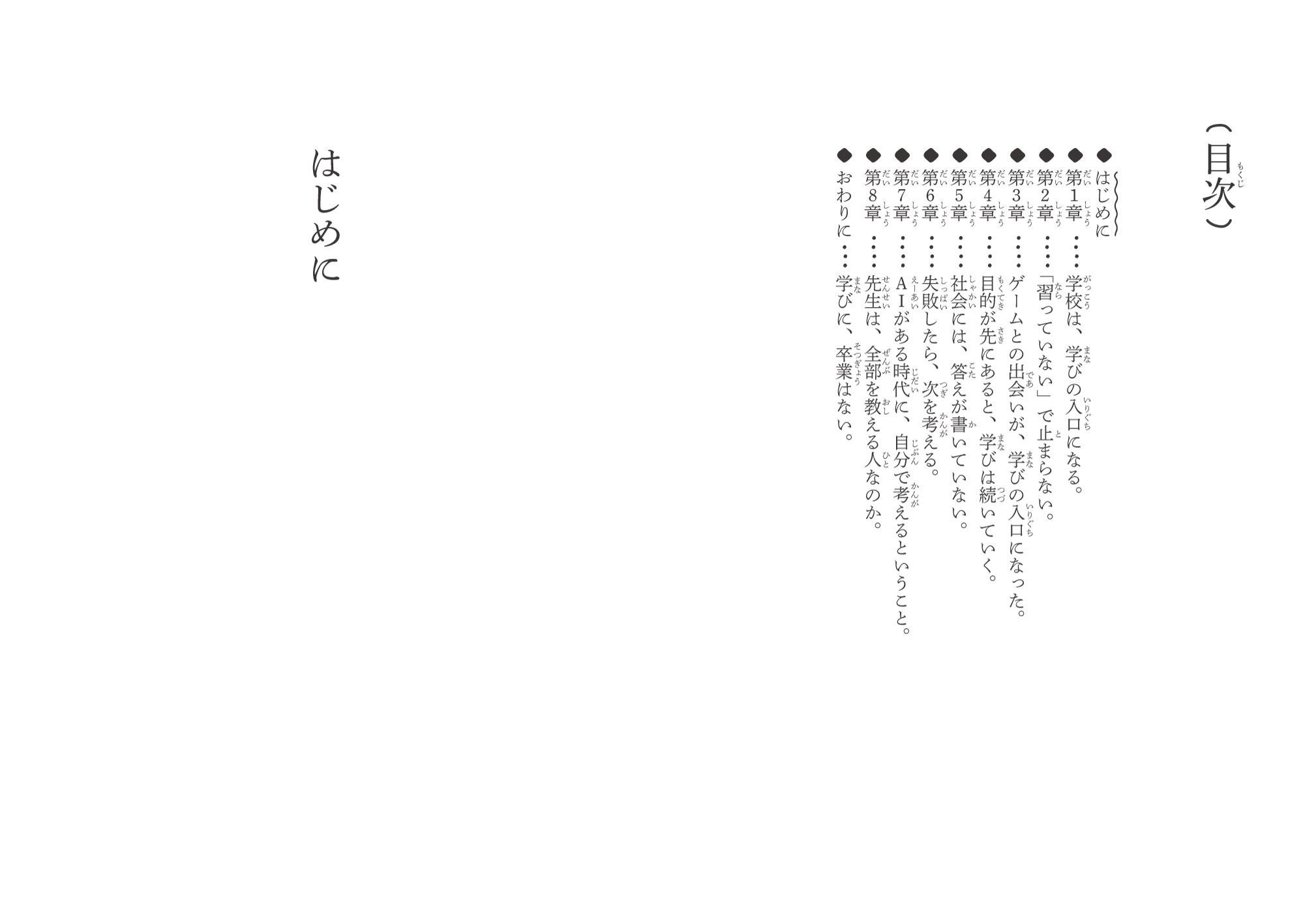
I'm using Adobe Illustrator to lay out the pages so they take shape as an actual book.
- How to place the chapter titles.
- How big to make the text.
- How much margin to leave.
- How it looks in vertical writing.
Where the eye goes first when you open a page.
I usually do web and graphic design,
but the way of thinking is a little different when the medium is a “book.”
Once I actually started laying it out,
I realized that “writing text” and “making text readable”
are different skills.
I want to gain more DTP experience through this project, too.
Furigana on everything
And the part I'm enjoying most right now is adding ruby.
In this book, I'm basically adding ruby to everything.
I'm putting furigana readings over as many kanji as possible.
For a book aimed at adults, that's usually unnecessary, I think.
But this book is about “learning.”
If possible, I want it to be readable regardless of age.
If kanji you can't read keep the content from getting across,
then I might as well write the readings in from the start.
That's the thinking behind full ruby.
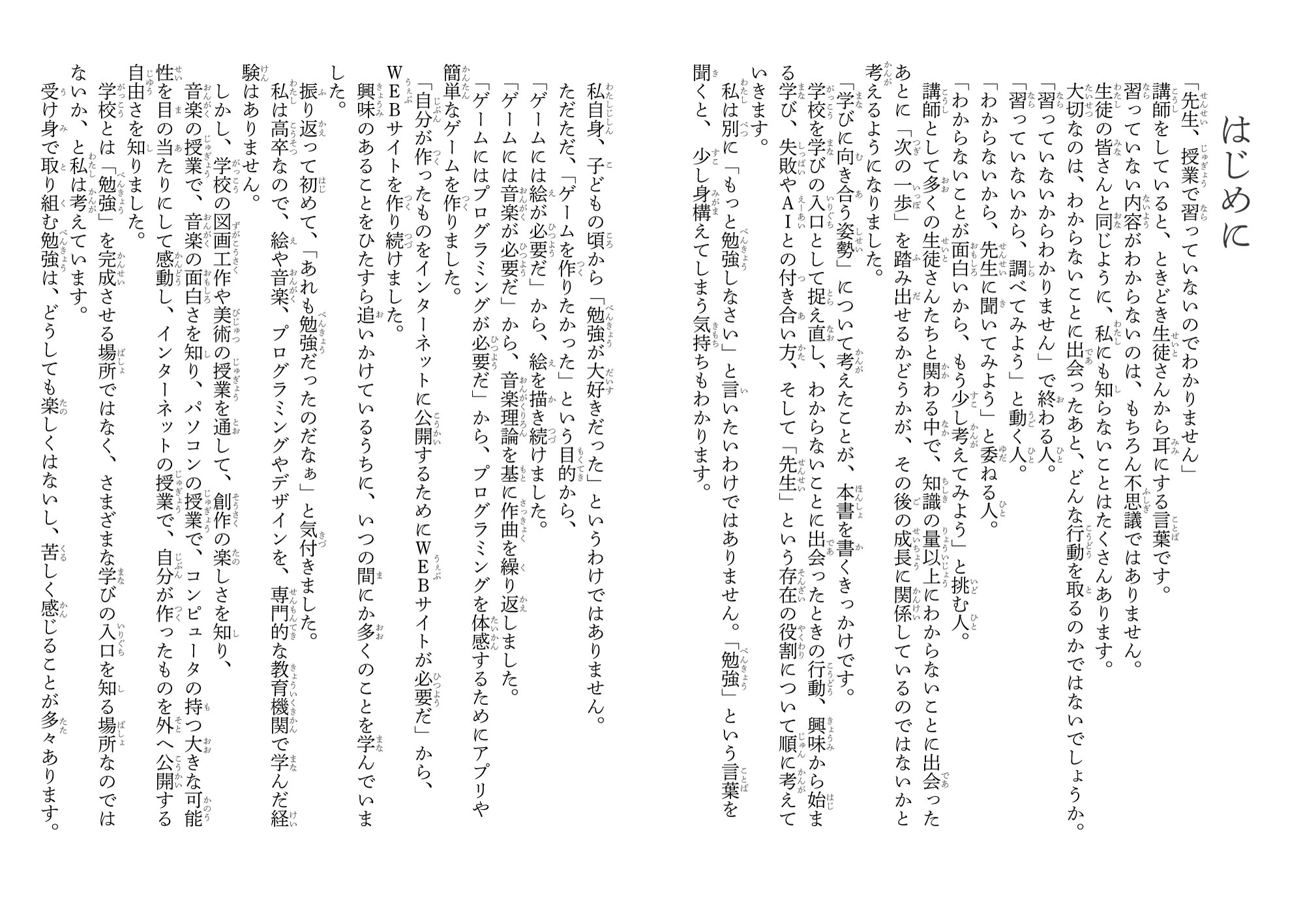
I check each character one by one in Illustrator as I add the ruby,
and lately it's been strangely fun.
It's a different kind of fun from writing the text.
- “So this kanji can be read this way.”
- “This compound word breaks here.”
- “The text looks different once it has ruby.”
I'm noticing all sorts of things I'd never paid attention to before.
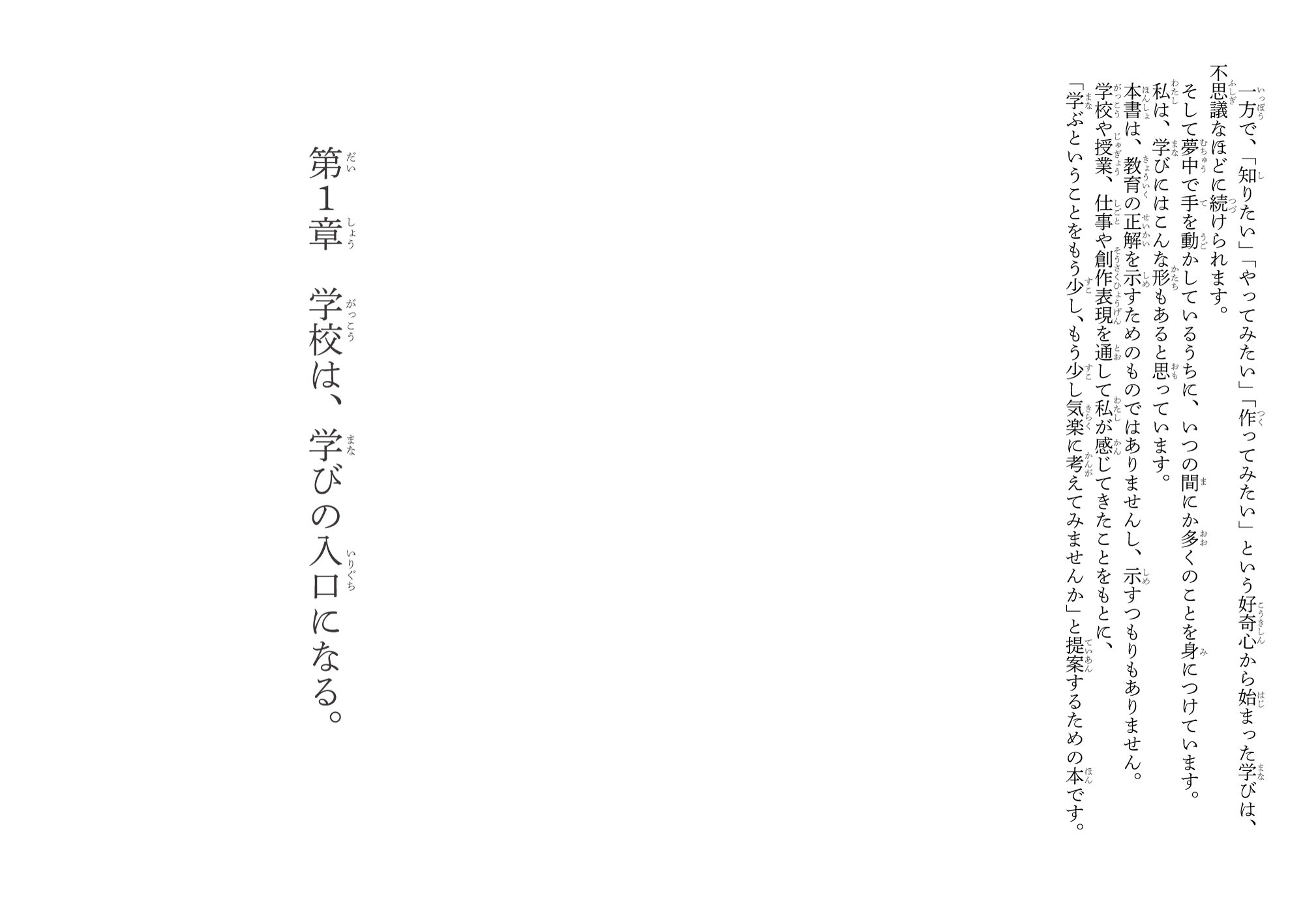
Writing a book about learning, and learning myself
Looking at it this way,
- Writing the text.
- Planning the structure.
- Laying out pages in Illustrator.
- Learning DTP.
- Looking into ruby.
- Thinking about readability.
I started every one of these because I needed it to write this book.
And that's exactly what the book itself talks about.
- I wanted to do something.
- Something I needed for it came up.
- So I look it up.
- I try it.
- I fail.
- I look it up again.
Before I know it, I've picked up something new.
“Ah, so this is studying too,”
I'm feeling it firsthand right now.
It'll still take a while to finish,
but I'll keep enjoying both the writing and the book-making as I go.